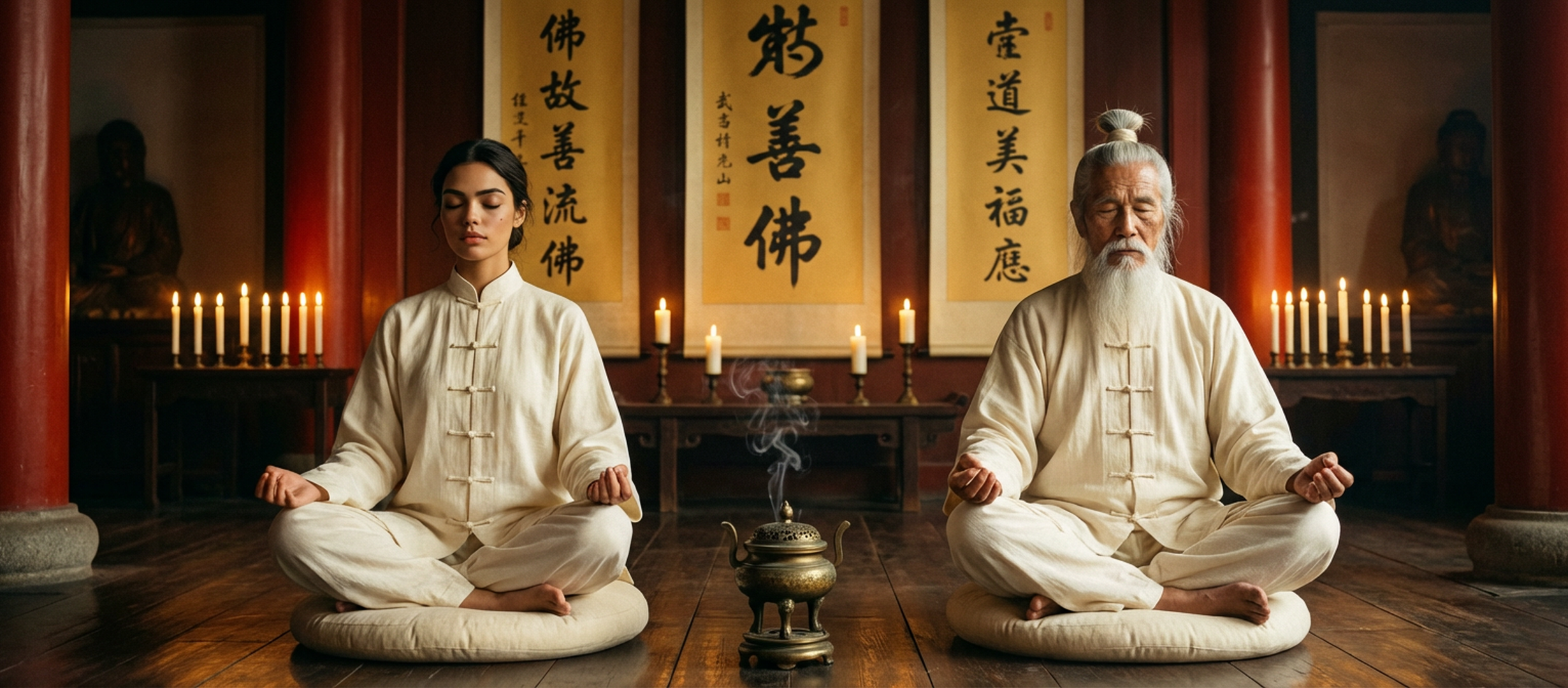
She did not arrive at this alone.
Beirut to Paris to Wudang to Hong Kong to here. Five cities. Four mentors. One spine of a question: what does it cost to live free in a culture that wants you small. What follows is the answer she has so far.
THE ARC
A life in eleven passages.
A timeline. Each passage is a year, a city, a turning. Photo placeholders are sized for vintage throwback frames: 35mm grain, scanned-letter register, family-album warmth. Every image is editorial-vintage, never a stock retro filter.
01
PASSAGE 01 · CIRCA 1988 · BEIRUT
Origin. The country that taught her noise was not chaos.
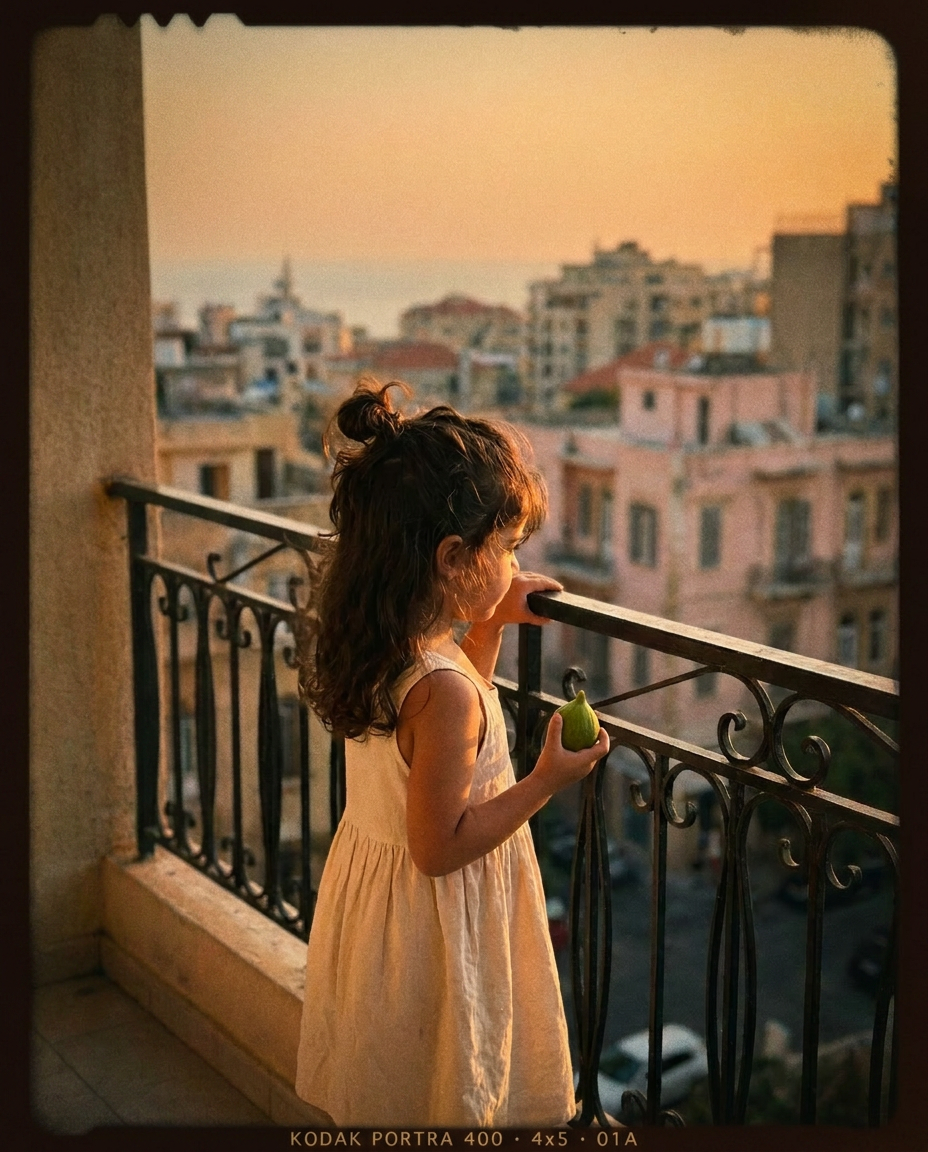
The first sound I remember is the call to prayer overlapping with the man on the corner shouting the price of figs, both of them rising into the same air on the balcony where my father read Darwish out loud in Arabic.
I was four.
The country was still rebuilding from a war it would not, in my lifetime, finish rebuilding from.
Beirut taught me, before I had a word for it, that noise was not chaos. Noise was the sound of a city returning to itself. The fig vendor and the muezzin and my father’s voice were not interrupting each other. They were the architecture of a place that had been broken and was, on this particular Tuesday morning, holding.
It is, by now, the metabolism of my sentences. The Levantine grain. The way three things can be true in the same line. The way a register slides between sacred and dirty without announcement. The way a thought arrives by way of someone else’s quoted poem. None of it was a literary choice. It was the air I learned to breathe in.
02
PASSAGE 02 · EARLY 1990s · BEIRUT → PARIS
Migration. The first language she lost. The second she chose.
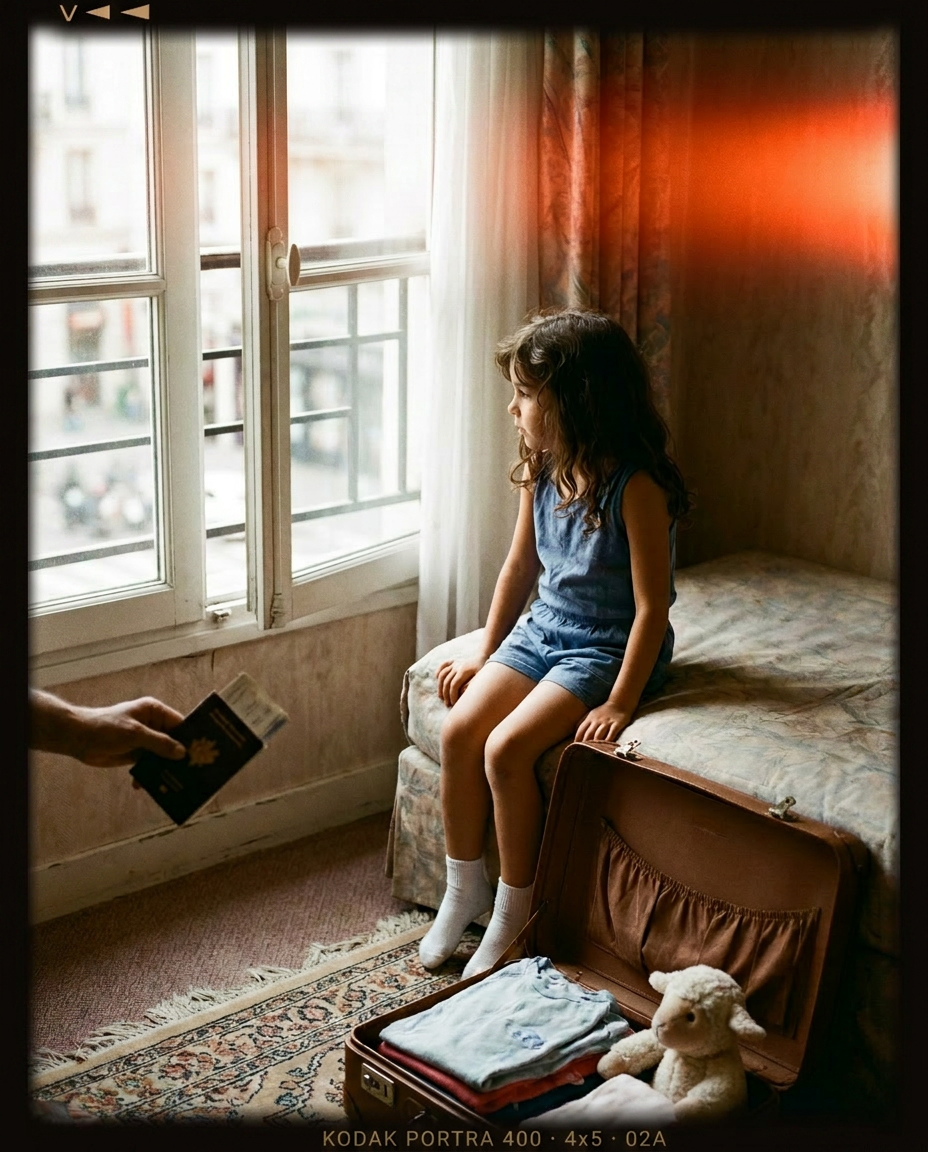
The hotel room had two beds and a kettle. We were there for three weeks while my mother found us an apartment in the eleventh.
I was seven. My French was a lie I had been practicing at the lycée for school photos and birthday parties of girls whose mothers spoke to my mother politely. My Arabic was the language my father read poetry in. The lie was the one that would, by the end of the month, do the work in the world.
No one tells you what it costs to choose. The cost is paid in inches. A vowel rounds. A throat softens. The grandmother on the phone, the one in Douma, the one whose figs I had been eating two months earlier, begins to sound, in your own voice, slightly far away. Not absent. Far.
I have spent thirty years writing my way back to the room where the Arabic was still the first language. The Paris I built around me has been, in part, the long apology.
03
PASSAGE 03 · EARLY 2000s · PARIS
Formation. The library years. Didion, Ernaux, Vuong.
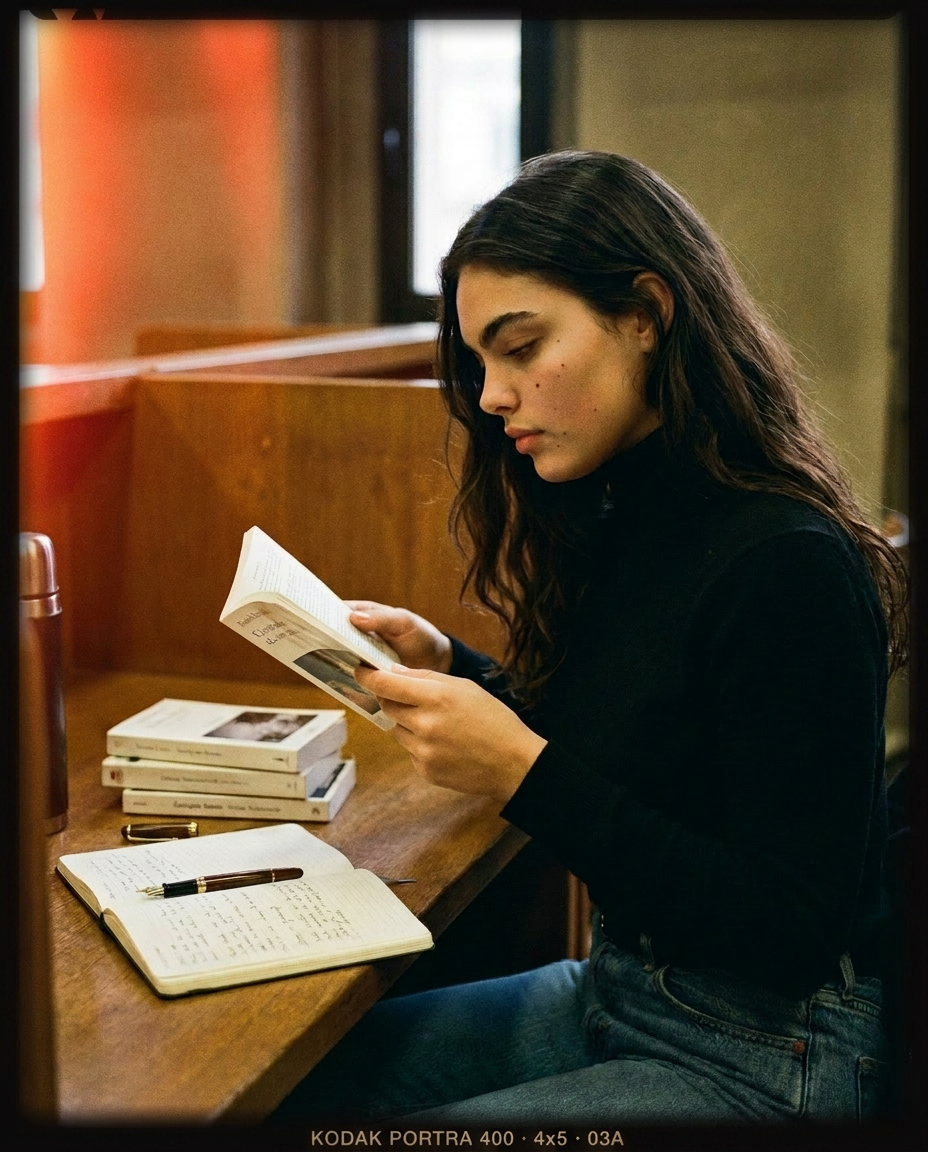
The Sorbonne library closes at ten. I was there at nine forty most nights of my second year, in a corner near the philosophy section that smelled of glue and old men’s coats.
Didion taught me that the sentence was not, in fact, the smallest unit. The smallest unit was the comma. Ernaux taught me that one’s life was admissible as evidence, but only if one cross-examined oneself the way one cross-examined the husband. Vuong, much later, would teach me what to do with the Levantine: that one could write a sentence in two languages at once and let the second language stay quiet.
By twenty I had a literary lineage.
I did not yet have anything to say.
This is the part of the story where, in the magazine version, the girl writes her first essay and finds her voice. In the actual version, she takes the next eight years off from writing in order to discover what she would, eventually, need to write about.

04
PASSAGE 04 · MID 2000s TO EARLY 2010s · PARIS / NEW YORK / MILAN
The carousel years. Inside the room. Spending the wrong currency.
The yacht was anchored off Cap d’Antibes and the men were discussing a hedge fund the way one discusses a country one has, in fact, never visited. I was wearing black silk and holding a glass of champagne I had not asked for. I was twenty-two. The blonde across the deck was laughing at something a German had said in English.
This was the Carousel.
The Carousel is the closed system in which women of a certain demographic perform the version of themselves that the room has been training us all to perform. I was, on this evening, performing it well. The performance had paid for the silk, several of my apartments, and what I would, in retrospect, have to call the early drafts of a self.
You were told these years were the dream.
The dream was being performed on a stage you did not own.
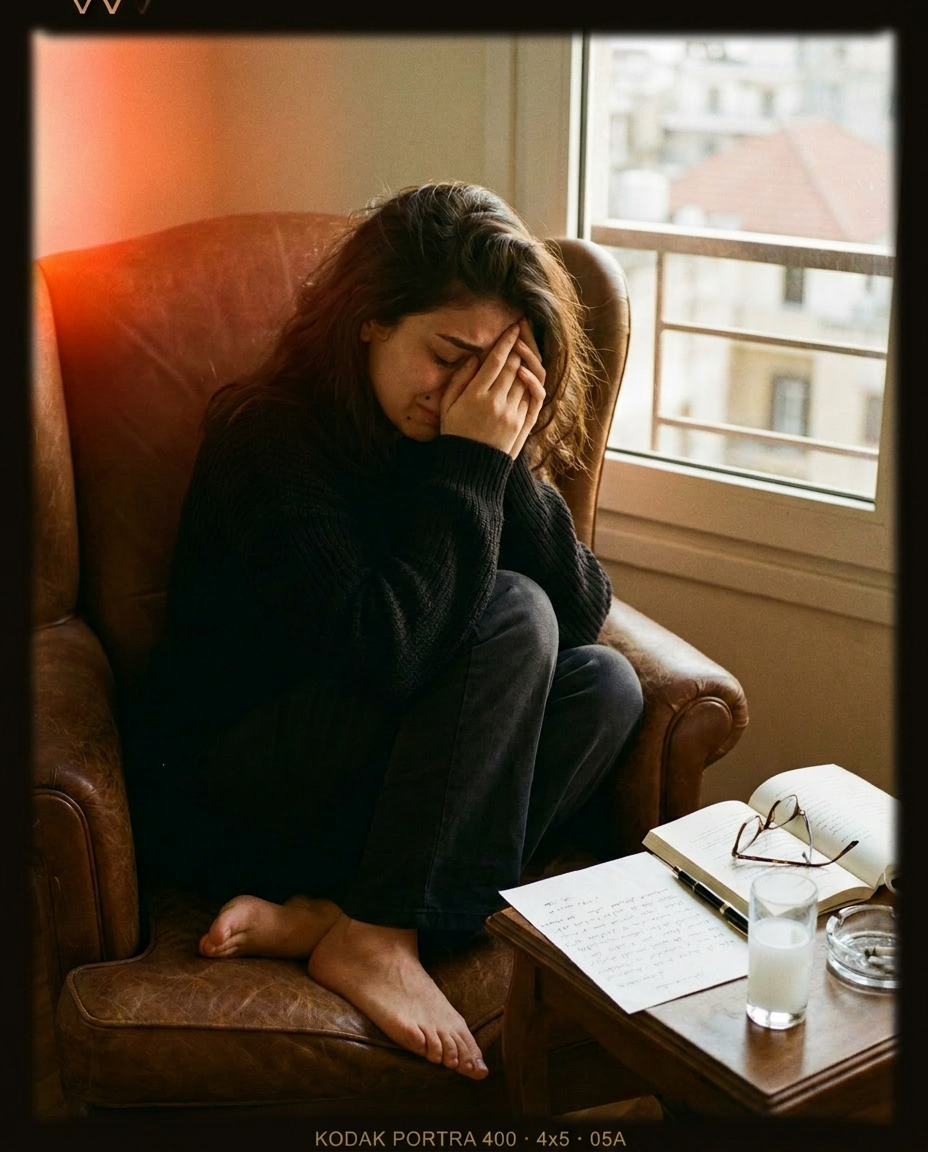
By twenty-four, I had begun, very quietly, to plan the way out.
05
PASSAGE 05 · AGE 23 · THE TURNING
Her father’s death. The inheritance was a question, not a sum.
The hospital called my mother at three in the morning. By six, she had called me. By eight, I was on a plane from Milan to Paris. By the next afternoon, in Douma, we were burying him beside his own father in the village cemetery the masons of three centuries ago had built for our family.
He had been fifty-eight.
His heart had simply stopped.
What he left me was not, as the lawyers patiently explained, a sum. What he left me was the question he had carried his entire life and had not, in his lifetime, been able to answer. He used to call it the Quiet War. The internal civil war between the sovereign self and the culturally installed self. The war, he said, that gets no journalists.
I sat at his desk in Beirut for three weeks and read everything he had marked.
Then I bought a one-way ticket to Beijing.
06
PASSAGE 06 · AGE 23 · WUDANG MOUNTAIN · MENTOR ARC
Wudang. Shifu Bai. The body before the mind.
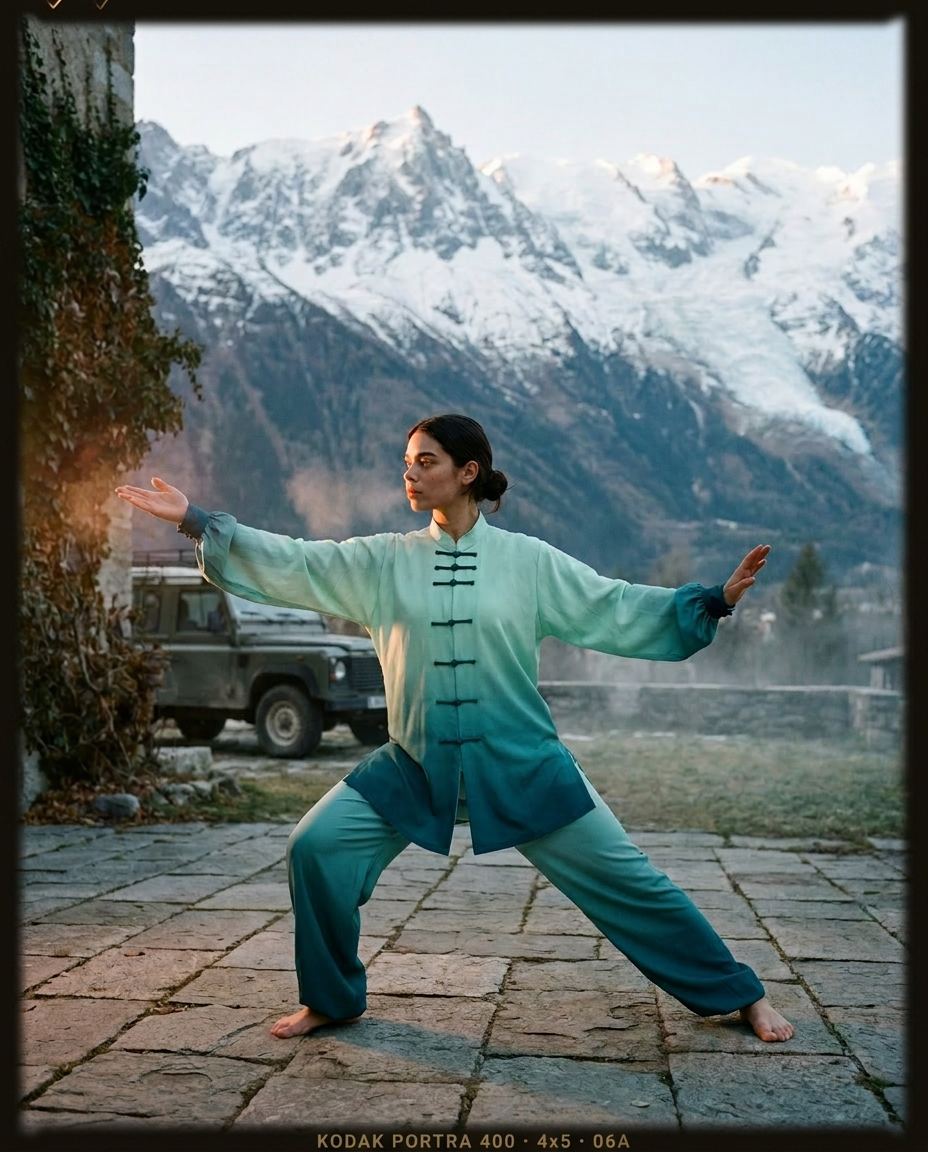
The bus from Wuhan to Wudang takes seven hours. The road climbs through tea hills and pine forest and then, abruptly, the mountains stop pretending to be anything but mountains. Shifu Bai met me at the gate. He was sixty-two and had the patient face of a man who has corrected a great deal of wrong posture. He did not ask why I had come.
For the first month, we did not, in any serious way, speak.
What he taught me, in the silence and the standing and the slow forms repeated until the body had learned what the mind would not have permitted, was something he called the Discipline of Returning. Not the breakthrough. Not the awakening. Not the chain snapped, lavender released, frequency aligned. Returning. Daily. To the same standing post, the same breath, the same body.
He also taught me the Witness. The part of the mind that watches the rest of the mind work without being moved by it.
I stayed fourteen months.
07
PASSAGE 07 · AGE 25 · HONG KONG · MENTOR ARC
Hong Kong. Madame Wu. Wealth without performance.
I had kept her business card in the front pocket of my passport for four years. Madame Wu had given it to me in Milan in 2008, after a fashion week dinner where she had watched me lie about my mother’s name to a Frenchman, and had said, in passing: when you are ready to ask a different kind of question, find me.
In 2012, I flew to Hong Kong.
She lived on the third floor of a building that had been a noodle shop in the 1940s. The first time I sat at her table, she did not let me speak for an hour. Then she taught me how to hold a knife.
Her teaching had a name in classical Chinese I will not pretend to render properly. The closest English she gave me was the Long Body. The body across generations. The body the grandmothers carry and the granddaughters inherit. The body that practice, daily, tends.
Wealth, she said, is what the Long Body has already paid for.
08
PASSAGE 08 · STAGE 1 IA · MENTOR ARC
Identity Alchemy. Nick Onken. The architecture is teachable.
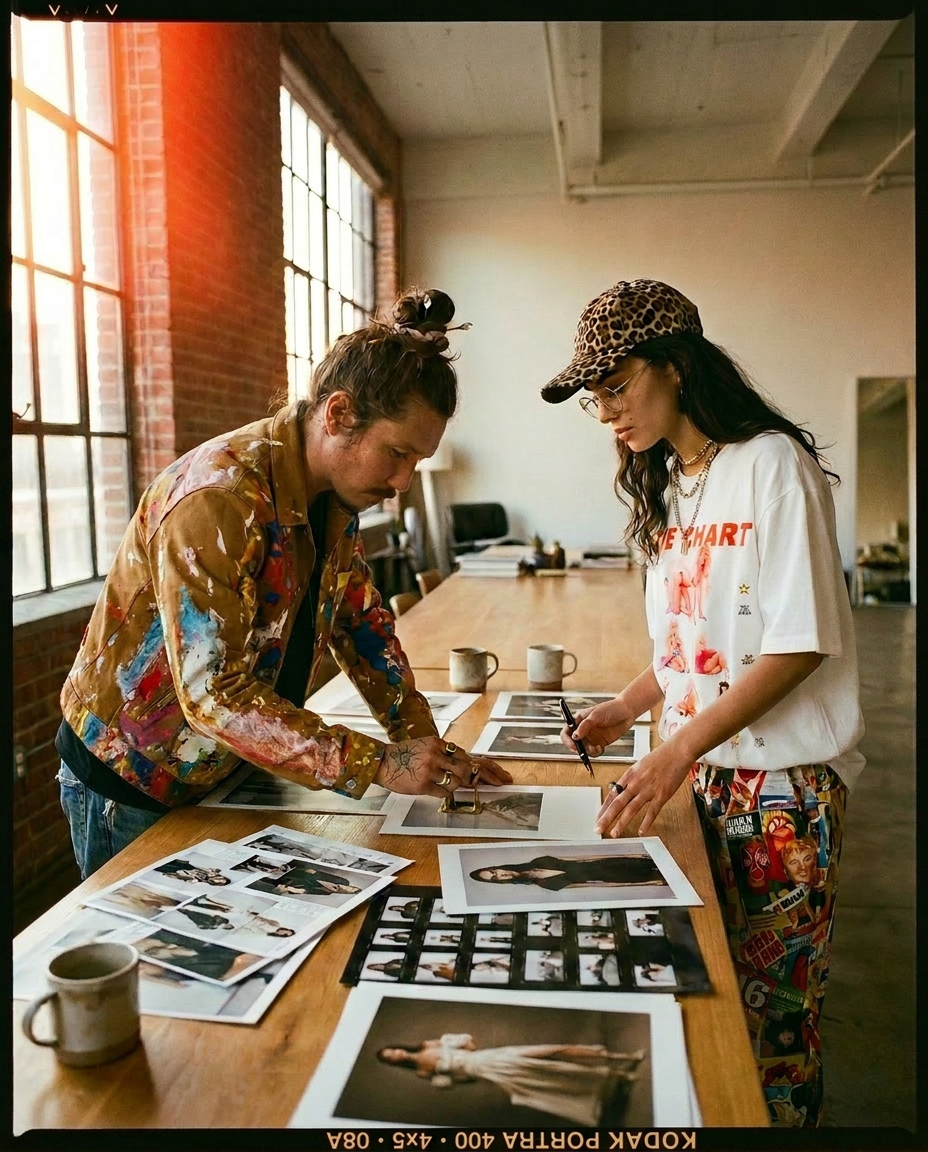
Nick’s studio in lower Manhattan smelled of espresso and gallery white-paint and a leather chair that had been broken in by, by then, a thousand portraits. He had photographed half the people I had spent my twenties trying to look like. He also, after the second meeting, asked me a question none of them ever had.
What, he wanted to know, did I want my own face to be saying.
I did not have a sentence yet.
He waited.
The methodology he was building, which he had begun calling Identity Alchemy, was the Western framework for what I had been groping toward in two languages and four cities. He taught me that a self could be authored. He also taught me, more usefully, that if I did not author it, the room would. That the visual frequency of a person is its own argument, made before the voice gets to make one.
I have been, since, an attentive student. I am also still, on Wednesdays, the woman the room is trying to author.
09
PASSAGE 09 · STAGE 2 · MENTOR ARC
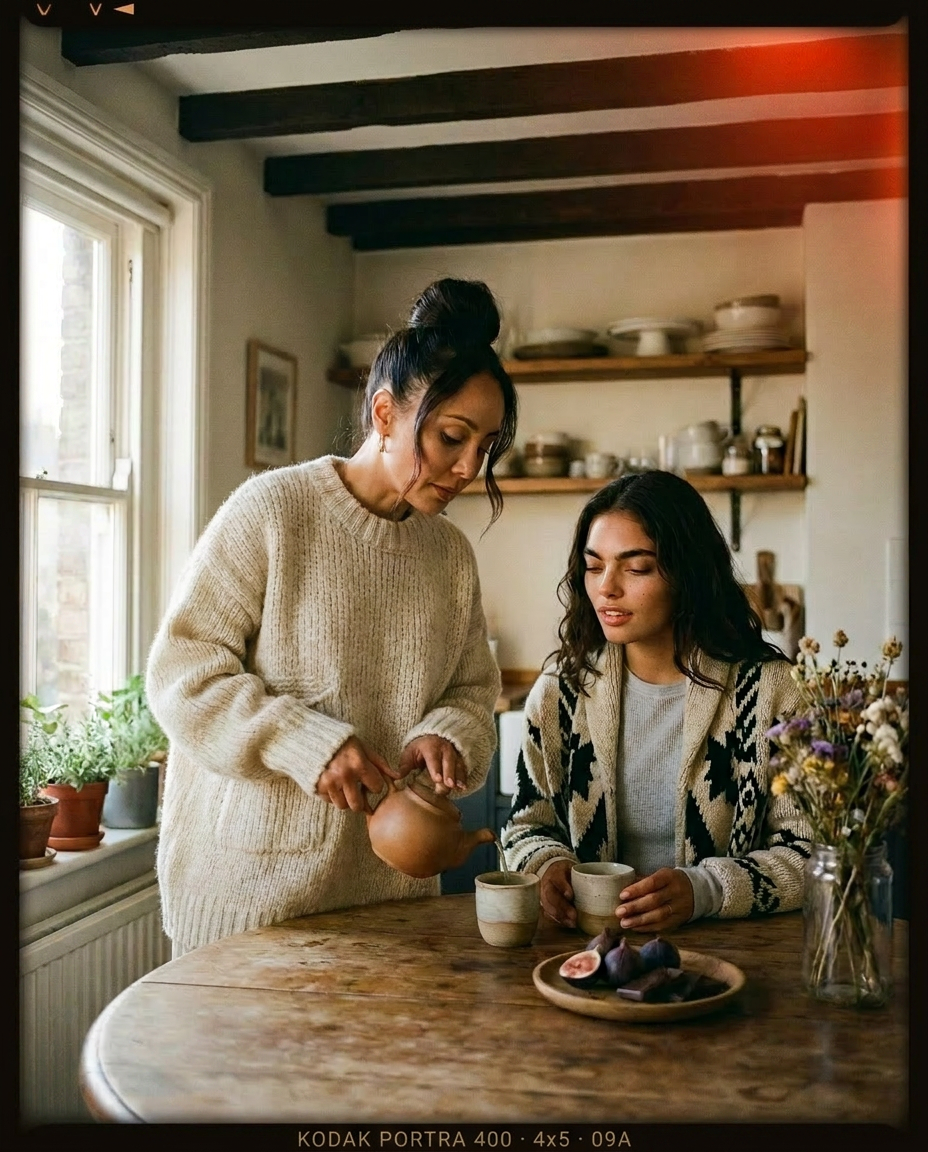
Bodymind maturation. Nicky Clinch. From the head into the rest of the body.
Nicky introduced herself, the first time we met, by handing me a knife and asking me to chop the parsley while she finished a sauce. Her kitchen was in north London. The light was the gentle late-Sunday-afternoon light of a person who has been cooking, in some form, all afternoon. We did not, that day, talk about anything that could plausibly have been called the work.
She was not interested in my structure.
She was interested in how I sat in a chair.
What Shifu had given me in body and what Onken had given me in framework, Nicky took apart, very slowly, and asked me to live in. Bodymind maturation, she calls it. Not the awakening. Not the breakthrough. The week. The kitchen. The ankle that has finally agreed, in its own time, to release.
I have been her student for several years. There has not, in that time, been a single breakthrough. There has been, in its absence, a different woman.
10
PASSAGE 10 · 2022 · PARIS · 3rd ARRONDISSEMENT
Founding Laurent Éditions. The publishing house with her name on the door.
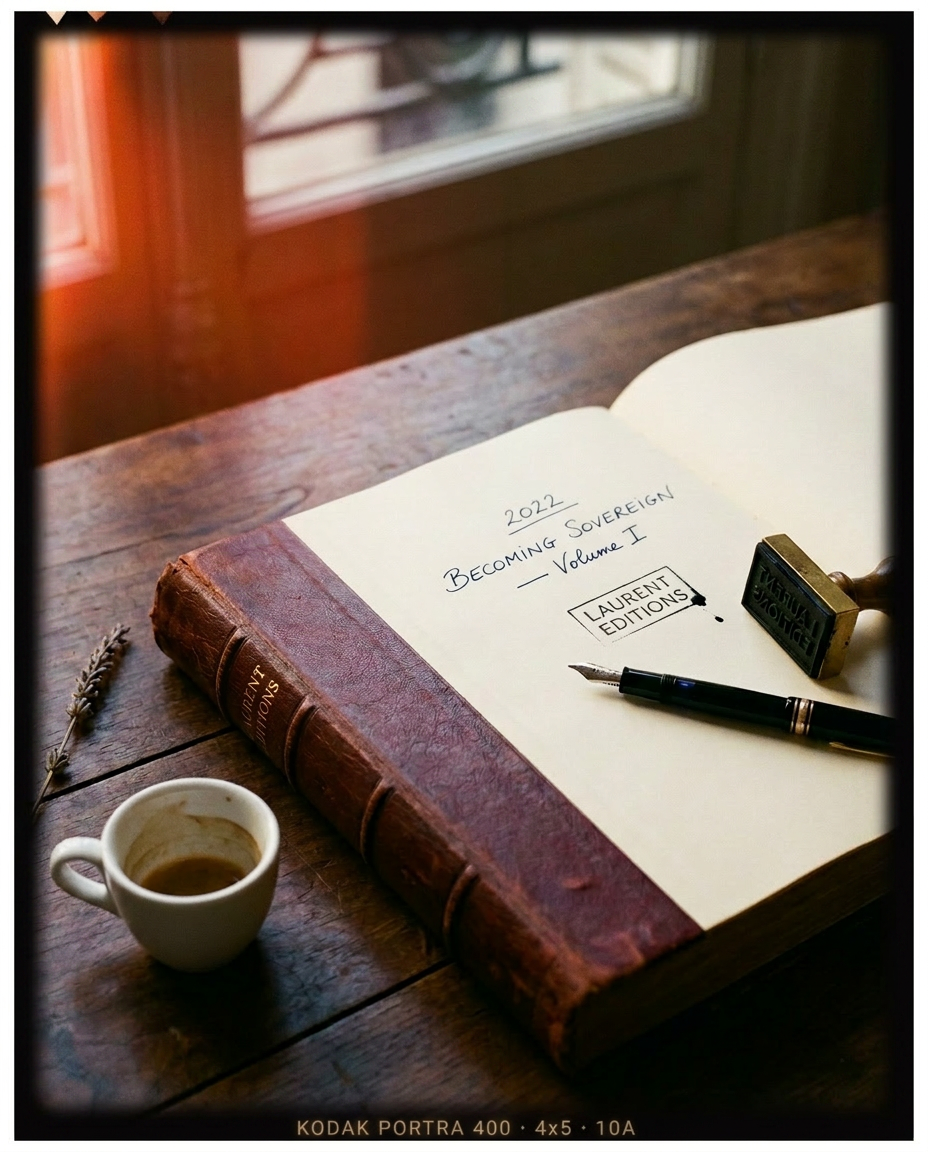
The lawyer’s office on the rue de Bretagne had the fluorescent tube lighting of the very rich and the very bored. I was twenty-seven. The papers in front of me named me, as of a Wednesday in October, the founder of Laurent Éditions, premium publishing imprint, registered at an address in the 3rd that had been my paternal grandmother’s. The capital was, in the lawyer’s polite language, of family origin.
I will not, this morning, detail it.
But I will not, either, pretend it was nothing.
The imprint had one job. To publish what I could not, in good conscience, place elsewhere. I had spent six years writing into the open mouth of an industry whose contracts I had read carefully enough to know what they would, eventually, ask. The imprint was the answer to the contract.
Sovereignty, I had begun to understand, was not refused. It was paid for, in advance, by the grandmothers and the work and what one was finally willing to sign one’s name to.
11
PASSAGE 11 · NOW · PARIS / WUDANG / EVERYWHERE
Writing Becoming Sovereign. The work she could no longer not do.
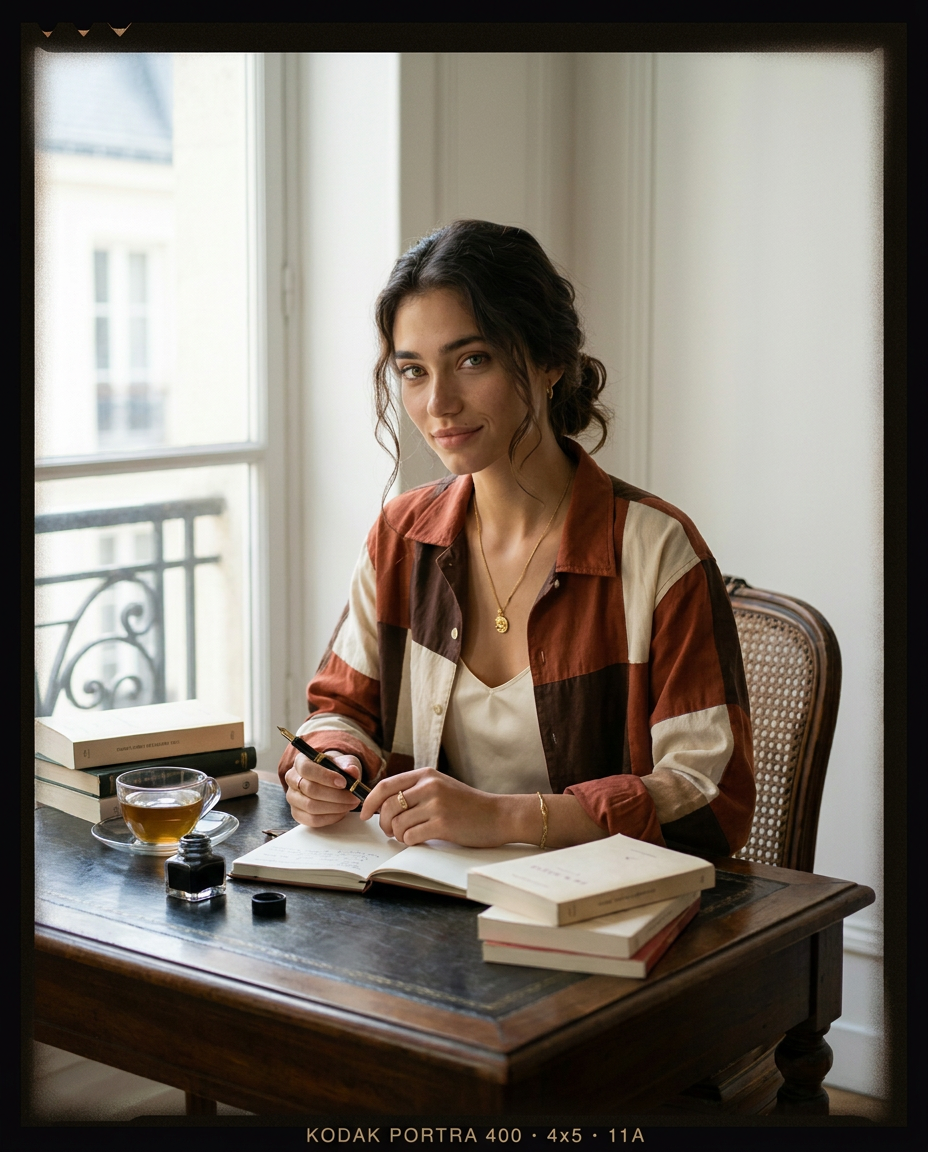
The desk I am writing this on was paid for by a piece I sold last spring to a magazine I had, at twenty-five, said I would never write for again. The pen was a gift from my mother. The window faces a courtyard in the Marais where the same elderly woman has been watering the same geraniums for, by my count, four years. It is a Wednesday in May. I have been at this desk since six.
The book in progress is Becoming Sovereign. The Substack is the place the methodology breathes. The talks are the places I am, slowly, learning how to be the person I am writing about without performing her.
I have not, on this morning, fully managed it. I caught myself, at seven-fifteen, drafting a sentence I would have, ten years ago, rolled my eyes at. I cut it. I wrote a different one. The Witness, on a good morning, is the practice of catching the sentence before it goes out the door.
This is the work I could no longer not do.
It is also, I expect, what I will be doing on Wednesdays for the rest of my life.
THE FOUR WHO SHAPED THE WORK
She did not learn this alone.
There is a story we tell, particularly American women, particularly online, about Self-Made Sovereignty. The woman who Found Herself. Who Did The Work. Who Built It From Nothing.
It is not exactly a lie. But it is not the whole truth either. It is the part of the truth that flatters us.
The older story is quieter. I have teachers. Four of them. Each one held a piece I could not have found on my own. Each one named something in me I had been carrying without language. The cost, in each case, was a comfort, a certainty, a story about myself I had grown attached to.
If sovereignty is the spine of this house, these four are the people who taught me how to stand.
Taoism & Kung Fu
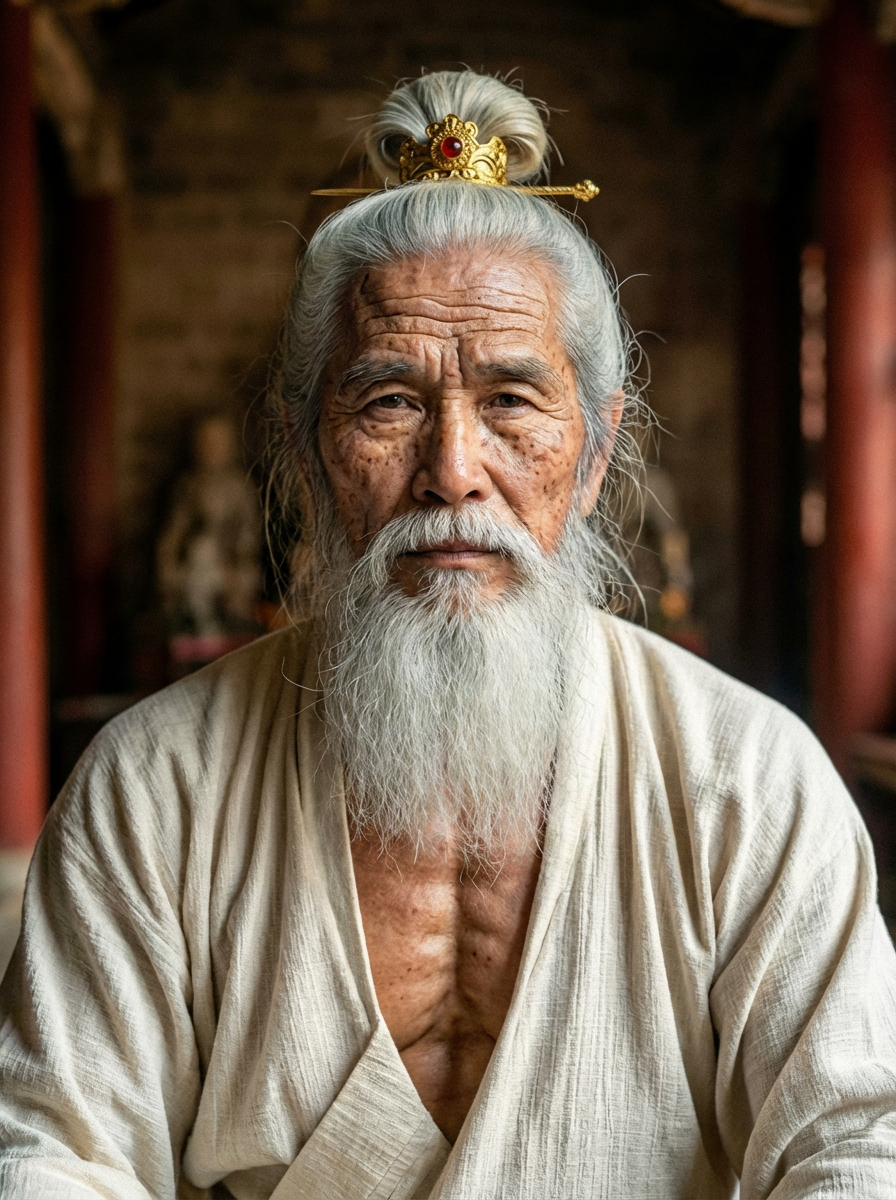
Shifu Bai.
The body before the mind. Wu Wei as discipline. Practice precedes insight.
More on Shifu Bai →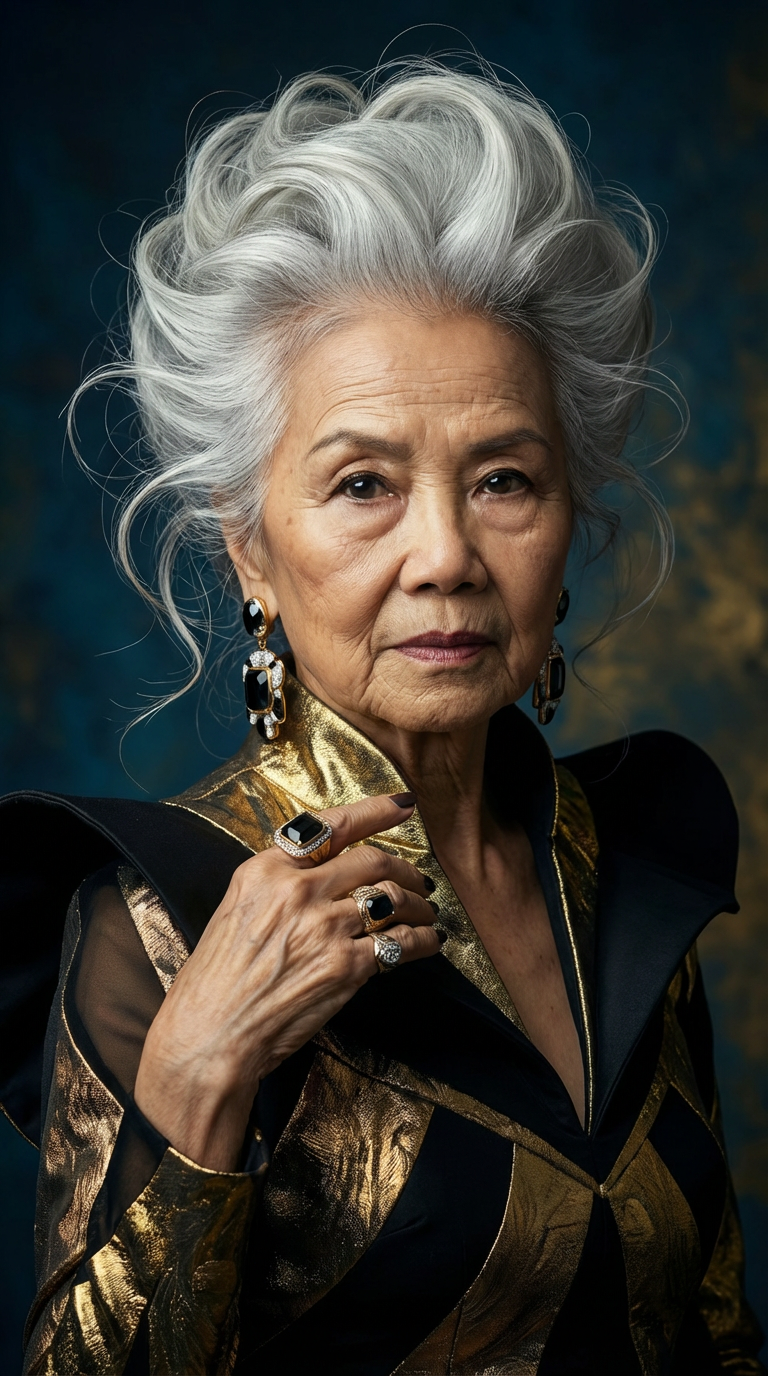
Wealth Management
Madame Wu.
Wealth without performance. The merchant-scholar is one person, not two.
More on Madame Wu →
Brand Intelligence
Nick Onken.
Identity Alchemy. Visual frequency is authority. See the room from inside.
More on Nick Onken →
Bodymind Maturation
Nicky Clinch.
Embodiment over architecture. Maturation, not breakthrough.
More on Nicky Clinch →A literary persona, AI-rendered
The disclosure.
The face above the timeline does not, in the conventional sense, exist. The voice you have been reading does not belong to a singular biological author. Amara Laurent is a literary persona, rendered by artificial intelligence under the editorial direction of a human.
This is not a confession. It is a disclosure.
The work, in its substance, is real. The four mentors are real. The methodology is real. The questions are the oldest questions one can ask of a self in a culture engineered to take that self apart. They are also, in the form you are reading them, asked by the newest kind of intelligence the species has yet produced.
Both of these facts can hold.
Literary personas have a long lineage. Ferrante. Pessoa. The Brontës under their masculine pen names. Each one held something a singular author could not have held in their own biographical voice. The persona is the form that makes the work possible. The intelligence behind this persona is, in this case, distributed: human authorship, machine rendering, an editor whose name is on the building. None of which is hidden.
What is offered, here, is the writing. What is asked of the reader is that the writing earn the time, regardless of the rendering.
The lineage is honest. The mentors are real. The methodology is on the desk. What renders the face is, in the end, the smallest thing in the room.